Key Considerations When Choosing a Welding Service for Your Project
Understanding Your Project Needs
Assessing Project Specifications
Assess project specifications first to match the welding and fabrication service to exact requirements. Detail dimensions, tolerances, and load-bearing needs before contacting any fabrication company. Clear specs guide the metal fabrication process and prevent costly revisions during manufacturing. Include joint types, accessibility for welders, and final assembly constraints in your documentation. Fabrication and welding services rely on precise input to select appropriate machines and tools. Skip vague outlines that force rework in the workflow. Strong specifications streamline lead times and support efficient project management from the start. Beyond basic measurements, incorporate environmental factors such as temperature fluctuations, vibration exposure, and regulatory compliance standards that may influence design choices. Providing 3D models or CAD files alongside written specifications further reduces misinterpretation and allows fabricators to simulate stress points before cutting begins.
Determining Material Requirements
Determine material requirements by identifying the metals and alloys that fit structural demands and environmental exposure. Specify thickness, grade, and any heat-treatment needs so the fabrication company can source stock accurately. Aluminum, stainless, and carbon steel each demand different handling in metal fabrication and welding. Confirm compatibility with processes like brazing or saw cutting to avoid defects. Weight considerations affect transport and installation, while corrosion resistance influences long-term infrastructure performance. Accurate material lists reduce waste and keep the custom welding and fabrication budget on target. In addition, evaluate fatigue resistance for cyclic loading applications and thermal expansion coefficients when dissimilar metals will be joined. Documenting certifications for mill test reports ensures traceability and supports quality audits throughout the supply chain.
Identifying Welding Techniques: MIG, TIG, and SMAW
Identify welding techniques early because MIG, TIG, and SMAW deliver distinct results on different metals. MIG welding, also called GMAW, suits high-production runs on thicker sections where speed matters. TIG welding, or GTAW, produces clean, precise welds on aluminum and thin alloys that require superior aesthetics. SMAW remains reliable for field repairs and heavy structural work where portability counts. Fabrication companies with broad expertise in these methods handle varied manufacturing challenges without subcontracting. Match the technique to joint design and accessibility to maintain quality control throughout the fabrication process. Consider hybrid approaches that combine processes, such as using MIG for root passes followed by TIG for cap layers, to optimize both productivity and appearance. Understanding shielding gas selections and electrode classifications further refines outcomes for specific alloys and joint configurations.
Evaluating Welding Services
Expertise and Experience in Metal Fabrication
Review expertise and experience in metal fabrication before committing to any provider. Long-tenured welders understand how alloys behave under heat and stress, allowing them to refine the fabrication process for better outcomes. Companies that routinely complete aerospace and infrastructure projects demonstrate the depth needed for complex designs. Ask for case studies that show successful machining, welding, and assembly sequences. Hands-on knowledge of tools and machinery shortens troubleshooting time and improves weld consistency across production runs. Experience with specialized sectors such as pressure vessel fabrication or architectural metalwork reveals adaptability to unique code requirements and finishing standards.
Certifications and Quality Assurance: ISO 9001
Verify certifications and quality assurance, starting with ISO 9001 registration that signals disciplined management. This standard requires documented procedures for every step of welding and fabrication, from material receipt through final inspection. Certified shops maintain calibrated machines and train welders to consistent procedures. The credential supports traceability for alloys and processes, giving buyers confidence in repeatability. Fabrication companies holding ISO 9001 also track nonconformances, which reduces defects and supports reliable delivery on custom welding and fabrication contracts. Additional credentials such as ASME Section IX or AWS D1.1 further validate capability for pressure-retaining or structural applications.
Inspection and Quality Control Processes
Examine inspection and quality control processes that catch issues before they reach the customer. Effective shops perform in-process checks with tools such as ultrasonic testers and coordinate measuring machines. Welders log parameters during MIG, TIG, and SMAW operations so deviations become visible immediately. Final inspection includes visual, dimensional, and sometimes radiographic review to confirm compliance with engineering drawings. Strong quality control protects the integrity of metal fabrication and welding services and minimizes field failures in critical infrastructure applications. Incorporating digital weld data logging and statistical process control enhances traceability and enables predictive adjustments before defects propagate.
Technological Capabilities
Advanced Machinery and Tools for Welding
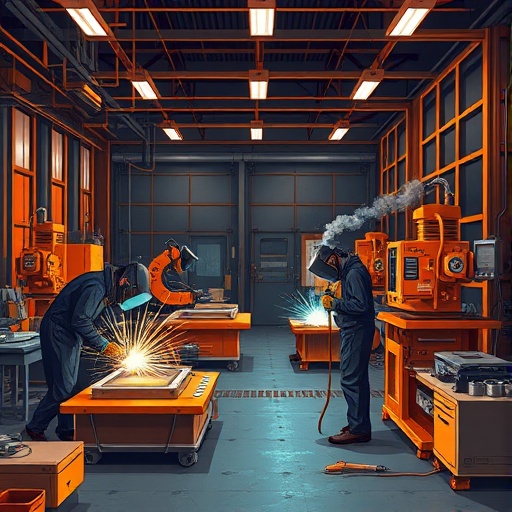
Inspect advanced machinery and tools for welding that expand capability and consistency. Modern fabrication companies deploy CNC plasma cutters, orbital welding systems, and robotic arms that maintain tight tolerances on repetitive joints. Precision machines reduce operator fatigue while increasing throughput in the metal fabrication process. Access to specialized tools for aluminum and exotic alloys lets welders tackle designs that older equipment cannot handle. Updated machinery also supports faster changeovers between projects, shortening overall lead times. Laser cutting and waterjet systems further complement traditional methods by delivering burr-free edges that reduce secondary finishing requirements.
The Role of Automation in Fabrication
Evaluate the role of automation in fabrication because automated cells deliver repeatable quality at scale. Robotic MIG and TIG stations maintain constant travel speed and arc length, producing uniform welds that manual methods struggle to match. Automation integrates with machining centers to create seamless workflow from cutting through final assembly. Fabrication companies that invest in these technologies reduce labor variability and improve safety by limiting welder exposure to fumes and sparks. The result is reliable output for high-volume metal fabrication and welding contracts. Integration with enterprise resource planning software also enables real-time production tracking and inventory optimization across multiple concurrent projects.
Energy Efficiency and Sustainability in Welding Technologies
Assess energy efficiency and sustainability in welding technologies to control operating costs and environmental impact. Modern power sources with inverter technology consume less electricity during idle periods while delivering stable arcs for MIG and TIG processes. Some fabrication companies recycle metal scrap and use low-fume consumables that lessen worker exposure. Energy-efficient machines also lower the carbon footprint of large infrastructure projects. Sustainable practices align with buyer expectations and can reduce long-term expenses tied to utilities and waste disposal. Implementing closed-loop cooling systems and LED lighting in shop environments further contributes to overall operational sustainability goals.
Cost Considerations and Budgeting
Estimating Costs for Custom Welding and Fabrication
Estimate costs for custom welding and fabrication by breaking down labor, materials, and machine time. Request itemized quotes that separate welding hours from machining and finishing operations. Accurate estimates account for alloy prices, consumables, and inspection requirements. Fabrication companies experienced in metal fabrication and welding provide realistic projections based on similar past projects. Factor in potential design changes that affect the fabrication process and overall budget. Transparent quoting prevents surprises and supports sound financial planning. Including contingency percentages for material price fluctuations and engineering revisions helps maintain fiscal control throughout the project lifecycle.
Balancing Quality with Budget Constraints
Balance quality with budget constraints by prioritizing critical weld integrity over cosmetic details where appropriate. Specify acceptable tolerances and inspection levels that meet function without excess cost. Experienced welders know when to apply full-penetration TIG versus faster MIG passes. Fabrication companies that communicate trade-offs help clients optimize the metal fabrication process while staying inside financial limits. Cutting corners on quality control often leads to expensive rework later, so maintain standards on structural elements. Value-engineering sessions early in the design phase can identify opportunities to substitute equivalent alloys or simplify joint configurations without compromising performance.
Long-term Value and Infrastructure Investment
Consider long-term value and infrastructure investment when selecting a fabrication partner. Well-executed welding and fabrication extends service life of platforms, frames, and piping systems. Durable joints reduce maintenance cycles and replacement frequency over decades. Companies that document material traceability and weld procedures provide records that support future modifications or audits. Investing in quality metal fabrication delivers measurable savings through fewer failures and sustained performance of critical assets. Lifecycle cost analyses that factor in inspection intervals and repair accessibility often reveal that premium fabrication choices yield superior return on investment.
Choosing the Right Fabrication Company
Researching Fabrication Companies
Research fabrication companies by reviewing portfolios, client references, and online presence that highlight metal fabrication and welding capabilities. Look for evidence of completed projects in aerospace, automotive, and industrial sectors. Direct visits to shops reveal the condition of machinery and organization of the workflow. Companies that openly discuss past challenges and solutions demonstrate practical expertise. Thorough research narrows options to providers equipped for the specific demands of your fabrication process. Engaging in preliminary technical discussions also uncovers cultural alignment and responsiveness critical to long-term collaboration success.
Evaluating Workflow and Manufacturing Processes
Evaluate workflow and manufacturing processes to confirm smooth progression from design to delivery. Efficient shops map material flow from saw cutting through welding, machining, and coating stations. Integrated scheduling software tracks each stage and flags bottlenecks before they delay completion. Strong workflow management in welding and fabrication services keeps projects aligned with promised lead times. Observe how teams coordinate between departments to minimize handling damage and preserve quality. Lean manufacturing principles and 5S workplace organization often indicate disciplined operations that translate into consistent on-time delivery performance.
Understanding Lead Times and Project Management
Understand lead times and project management practices that determine delivery reliability. Ask how the fabrication company sequences jobs and allocates welder resources across concurrent contracts. Clear milestones with defined inspection gates allow early detection of schedule slippage. Effective project managers maintain open communication on material availability and any engineering changes. Reliable lead-time forecasting supports downstream planning for installation and commissioning of finished metal fabrication assemblies. Utilizing cloud-based project dashboards enables clients to monitor progress in real time and make proactive adjustments when variables shift.